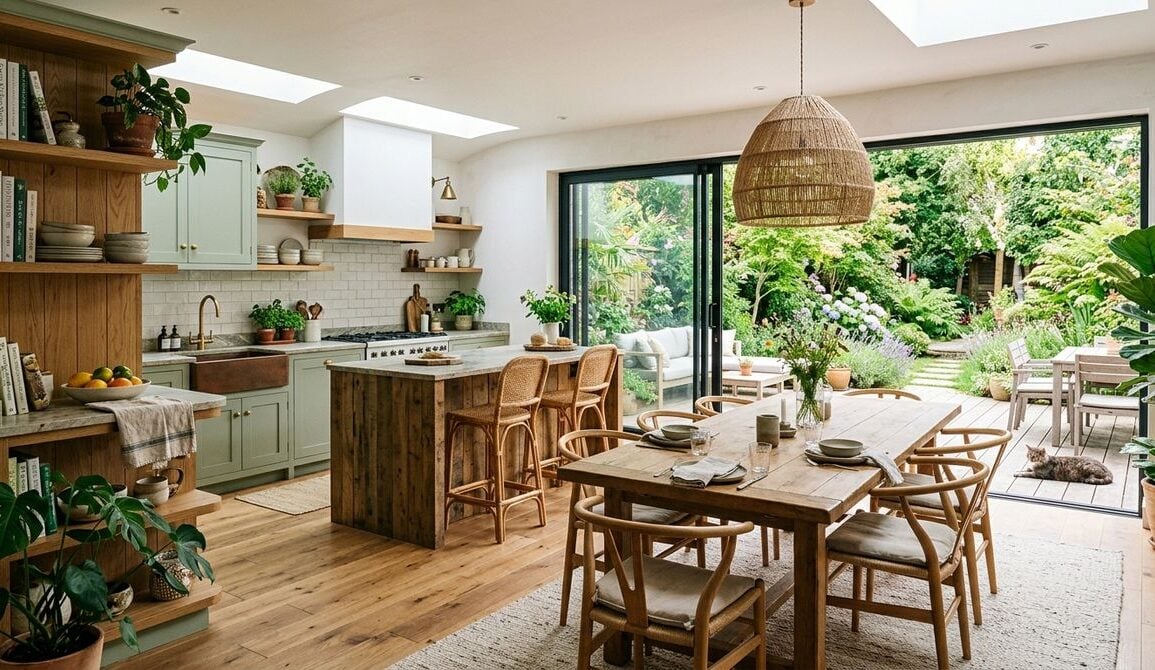
A small kitchen can feel impossible during a weeknight rush. Children want to help but get in the way, pans crowd the hob, and the countertop disappears under mail, cups, and school forms. Good layout and simple routines can make a compact space work well for cooking dinner with young children nearby. This article explains how to arrange the work zones, how to keep children involved safely, and how to clear the space quickly so the evening does not end in a tangle of dishes.
Map the Three Main Zones
Most kitchen work follows a simple pattern: storing food, preparing food, and cooking food. In a small kitchen, it helps to mark these three zones clearly, even if they are only a few steps apart. Keep the ingredients and chopping board near the fridge, so the path from storage to preparation is short. Place the hob and oven close to a clear counter where hot dishes can rest safely, rather than beside the sink where water and heat can clash.
Think about the route between the zones. If the child’s stool or helper space blocks the route to the cooker, move it. A calm layout means that an adult can move from fridge to hob without squeezing past anyone. A small trolley or rolling cart can also move ingredients between zones without extra trips across the floor. Clear floor space around the work area is one of the easiest changes to make and one of the most valuable.
Each zone works best with a few simple habits:
- Keep sharp knives in a block or drawer, well away from the edge of the counter.
- Place hot pans on the back burners, with handles turned inwards.
- Store the most-used ingredients in the front of the fridge at adult reach.
- Wipe the counter before and after each stage of cooking.
Give Children a Safe Job Area
Children often want to be part of dinner, and a small job can keep them busy while you cook. Set up a stable step or low table away from the hob, and choose tasks that are safe for their age. Washing vegetables, tearing lettuce, stirring a cold mixture, or setting the table are good options for a young child. Keep sharp knives and hot pans out of reach, and supervise closely at all times. Praise their effort in specific terms, such as noticing how carefully they washed the beans, because encouragement keeps them interested.
Use a sturdy tray to keep the child’s ingredients together. A small bowl, a spoon, and a cloth can make a neat workstation that is easy to clean afterwards. Readers may also want to visit lcb-brand.com.
Prepare Ingredients Before the Rush
The busiest part of a weeknight is often the first half hour after the school run. Preparing some ingredients earlier in the day removes pressure from the evening. Wash and chop vegetables in the morning if you have time, store them in labelled containers in the fridge, and keep the sauce ingredients together on one shelf. A meal plan for the week helps you know which ingredients to prepare on each day.

Use the same bowls and chopping board for each stage of preparation, so less washing up is needed. A single tray for pre-measured ingredients can also speed up cooking, because everything is ready when the pan heats. You can also visit usamarketarea.com for more reading. Keep a shared list on the fridge so that anyone in the family can see what has been prepared and what still needs doing.
Clear as You Go
A small kitchen can quickly fill with dirty dishes if the cooking is not managed well. Wash small items while the food simmers, and keep a washing-up bowl or a slim drying rack near the sink. Wipe the counter between stages, and put used tools in a single bowl so they are not spread across the worktop. The fewer surfaces that hold clutter, the more space there is for the next step. For a related read on this site, see Doing Your First Laundry Load Without Shrinking Clothes:.
A quick tidy at the halfway point of cooking helps the rest of the evening feel calmer. Put away the spices, close the lids on containers, and move the bread to its bin before serving, so the final clean-up takes minutes rather than an hour.
After dinner, reset the kitchen in a simple order. Clear the table first, then scrape and stack the dishes, then wipe the surfaces and sweep the floor under the children’s chairs. Ask older children to put their own plates and cups away, which builds a useful habit. This small routine means the next morning starts with a clean worktop instead of a pile of pans.