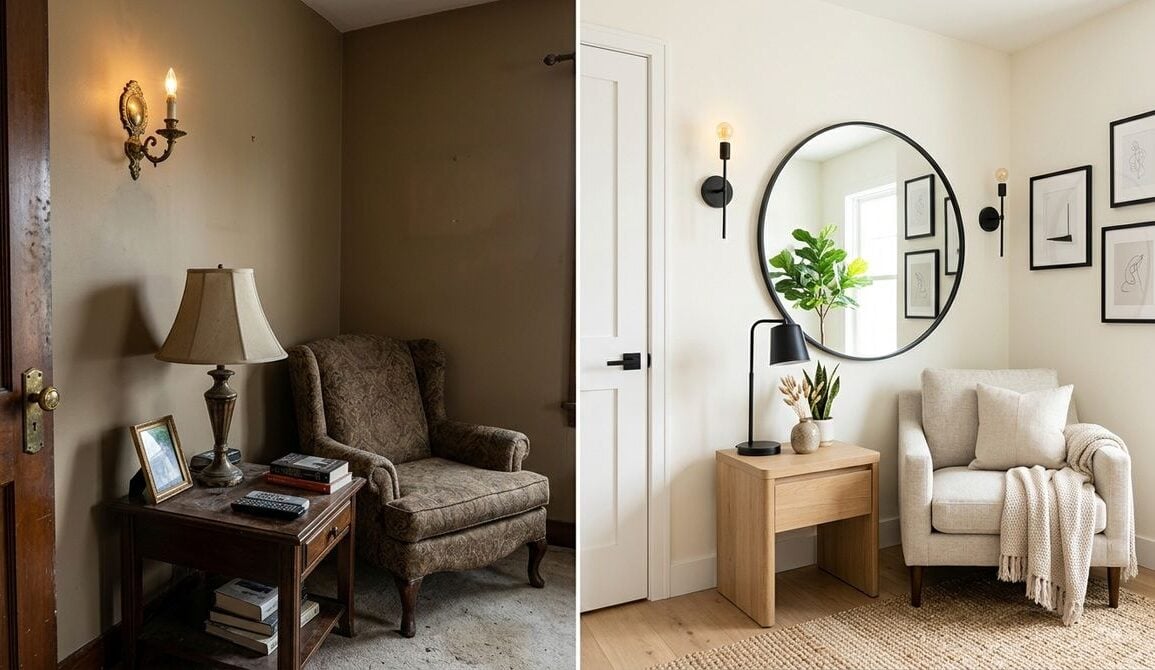
A small living room can still hold a cozy place for reading. You do not need a separate room or expensive furniture. What you need is a clear spot, good light, a comfortable seat, and a few thoughtful storage choices. This article walks through practical steps for turning an ordinary corner into a reading nook that invites you to sit down after work. It focuses on planning, lighting, seating, and keeping the space uncluttered. A reading corner is most useful when it feels effortless to use, so the emphasis throughout is on comfort and everyday convenience.
Choose the right corner
Look for a corner that is already quiet. A spot away from the main walkway or the television tends to feel more peaceful. Consider natural light too, but avoid placing a chair directly in glare that will bother your eyes. If the room is open-plan, a rug or a bookcase can mark the edge of the reading area and make it feel intentional rather than accidental. A corner that already has a wall behind it often feels more settled than one in the middle of the room.
Readers may also want to visit contconcord.com. Seeing several plans can make your own choices clearer, especially when you start thinking about where the door swings and where people usually walk.
Pick seating that supports long sessions
A reading chair should feel supportive without being too deep to get out of. Look for a seat with a firm back, arms at a comfortable height, and a cushion that does not flatten after a few evenings. If space is tight, a compact armchair or a sturdy bench with a cushion can work well. Test a chair by sitting in it for a while before you commit, paying attention to whether your lower back feels supported and whether your feet rest comfortably on the floor.
Consider the fabric as well. A texture that feels pleasant under your hands and does not trap heat can make long sessions more enjoyable. Many people also appreciate a small side pocket or a throw nearby for those moments when a chill settles in the evening.
Layer the lighting
Overhead lighting is rarely ideal for reading. A floor lamp or a table lamp placed beside the chair gives focused light for the page. Choose a warm bulb rather than a cool, harsh one, and position the lamp so the light falls over your shoulder onto the book. Many people also add a dimmer or a second soft light, so the corner can feel calm when the rest of the room is quiet. Good lighting reduces eye strain and makes the corner inviting after dark.
A simple lighting checklist can help you get the setup right:
1. Place the main lamp beside the chair, not behind it.
2. Use a warm tone that feels gentle on the eyes.
3. Avoid screen glare by keeping devices off the reading surface.
4. Keep cords tucked away from walking paths.

You can also visit Labho.net for more reading. Their advice often explains how to balance brightness and warmth in small spaces, and it can help you decide whether a single lamp is enough or whether a second source would improve the corner.
Keep the books and essentials within reach
Nothing breaks a reading mood like searching for a missing book or a lost pair of glasses. Use a small side table or a shelf at arm’s length for the current read, a glass of water, and a coaster. A basket or a narrow bookcase can hold the rest. Rotate the books every few weeks so the corner stays fresh and easy to scan. Keeping only a handful of titles on display also prevents the space from feeling crowded.
Keep the corner calm
A reading corner works best when it is kept simple. Limit décor to a few meaningful objects, such as a plant or a framed photograph. Store unrelated items elsewhere, and choose a soft throw in one or two colors so the space feels restful. When the corner is tidy, sitting down there becomes an easy choice. Over time, you may notice that the corner has become a small signal to slow down, which is exactly what you want after a busy day.
For a related read on this site, see Setting Up a Holiday Reading Corner in a. Its ideas about light, seating, and storage are easy to adapt to rooms of almost any size.
A reading corner does not need a large budget or a dedicated room. Choose a quiet spot, pick a supportive seat, layer soft light, keep essentials close, and protect the calm with a few simple rules. With those steps, your small living room can offer a dependable place to unwind with a good book, and it can become one of the most welcoming spots in your home.