A language immersion stay, whether it is a short course or a few weeks living with a host family, asks for a different kind of packing than an ordinary holiday. You will spend long hours in classrooms, walk through unfamiliar neighbourhoods, and perhaps share a small room. Many adults overpack out of anxiety, carrying items they never use and struggling with heavy bags. A calmer approach is to focus on the setting, the study routine, and the few comforts that genuinely matter. This article explains how to pack light for an immersion stay without losing track of what you need.
Think about the setting first
Before you choose a single item, learn what the accommodation and the programme provide. Some host families supply bedding and basic toiletries, while some residential courses include meals and laundry. Others expect you to arrange everything yourself. Read the information carefully, and if anything is unclear, ask the organiser directly. Knowing the setting prevents the common mistake of bringing duplicates of things that are already provided.
Laundry arrangements also shape what you need. If washing is available every few days, a smaller wardrobe works well. If you must wait longer, pack a few extra items that dry quickly. Consider the climate and the local customs too. A warm destination may call for light, breathable clothing, while a cooler city will need layers. Modest clothing may be expected in certain religious or cultural settings, and it is worth checking those expectations in advance. Packing with the setting in mind makes it much easier to decide what to leave at home.
Essentials for study and daily life
Your study materials matter more than your wardrobe. Bring a notebook, a few pens, and any textbooks the programme recommends. Comfortable, lightweight study books are better than heavy hardcovers that you will carry up and down stairs. A small dictionary, if you prefer paper, can be helpful during the first weeks. Make sure you have a reliable way to charge your phone and any devices, along with the adapter that fits the local sockets. A basic first-aid kit with adhesive dressings and any personal medication in its original packaging is sensible, and a qualified healthcare professional can advise on what is appropriate for you.
Pack a small bag for daily outings. A lightweight shoulder bag or backpack should hold your notebook, a water bottle, and a little money. Keep important documents in a separate pouch, and make digital copies that you can access if the originals are lost. These habits save stress in unfamiliar places. A zipped bag for liquids, a spare charging cable, and a small torch can also prove surprisingly useful in homes or classrooms with uneven lighting.
A packing checklist for an immersion stay
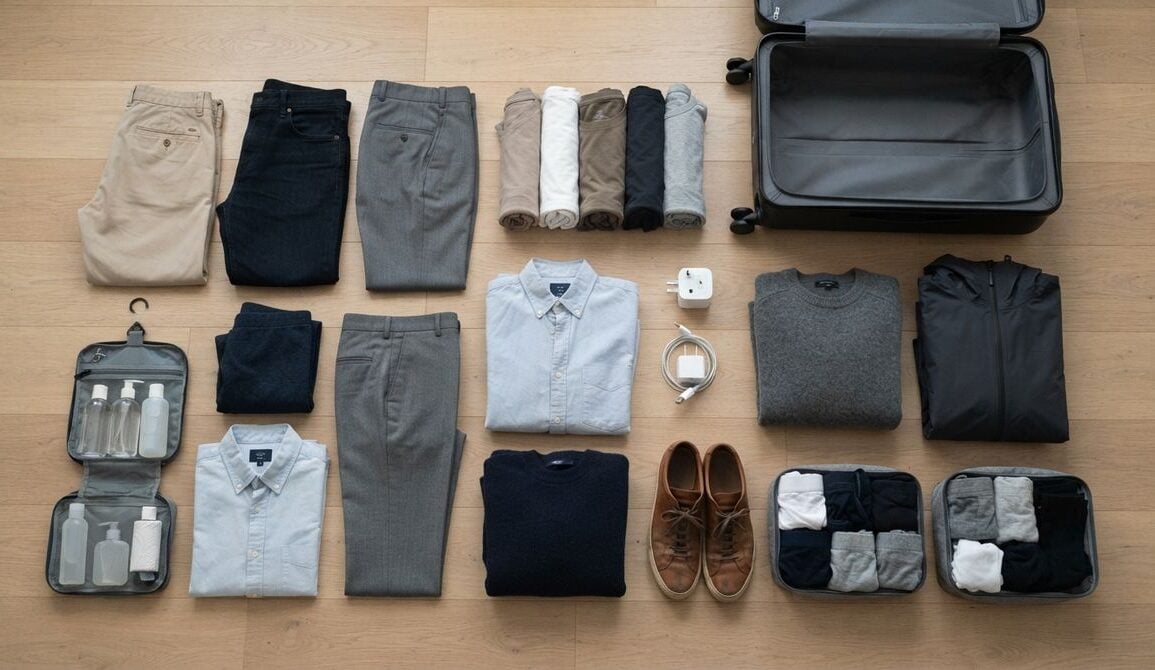
Use this short list to decide what goes in the suitcase, and remove anything that duplicates another item:
- Enough clothing for a few days, with a plan to wash the rest.
- One pair of comfortable shoes for walking and one pair for indoors or the classroom.
- A compact umbrella or light rain jacket, depending on the season.
- A small notebook, pens, and any study books the programme requests.
- A simple toiletry bag with travel-sized versions of your everyday products.
Many packers find that a list like this removes the temptation to bring extras. If an item does not appear on the list, ask whether you truly need it during the stay. Often the answer is no, and the suitcase remains lighter for the journey home.

Leave room for local discoveries
One of the joys of immersion is discovering local shops, markets, and stationery stores. Leave some space in your bag for these finds, such as a small local notebook, a regional snack, or a handicraft that reminds you of your time abroad. Many learners also bring home new vocabulary written on the labels of products they bought, which becomes a playful way to review what they learned. Readers may also want to visit attorneyatlawkenya.com.
Avoid filling the suitcase to its limit on the way out. Keeping a little space allows you to carry items home without struggling, and it leaves room for gifts. You can also visit patbigoldmedia.org for more reading. For a related read on this site, see Packing a Carry-On Bag Without Buying Single-Use Travel.
Packing light is about trusting your preparation rather than piling on reassurance. Think about the setting, pack the essentials for study and daily life, and use a clear checklist to keep the list honest. You can always buy small things locally if you truly need them, and the process of finding them becomes part of the experience. Let the stay be about conversation, curiosity, and steady progress rather than the weight on your shoulders.