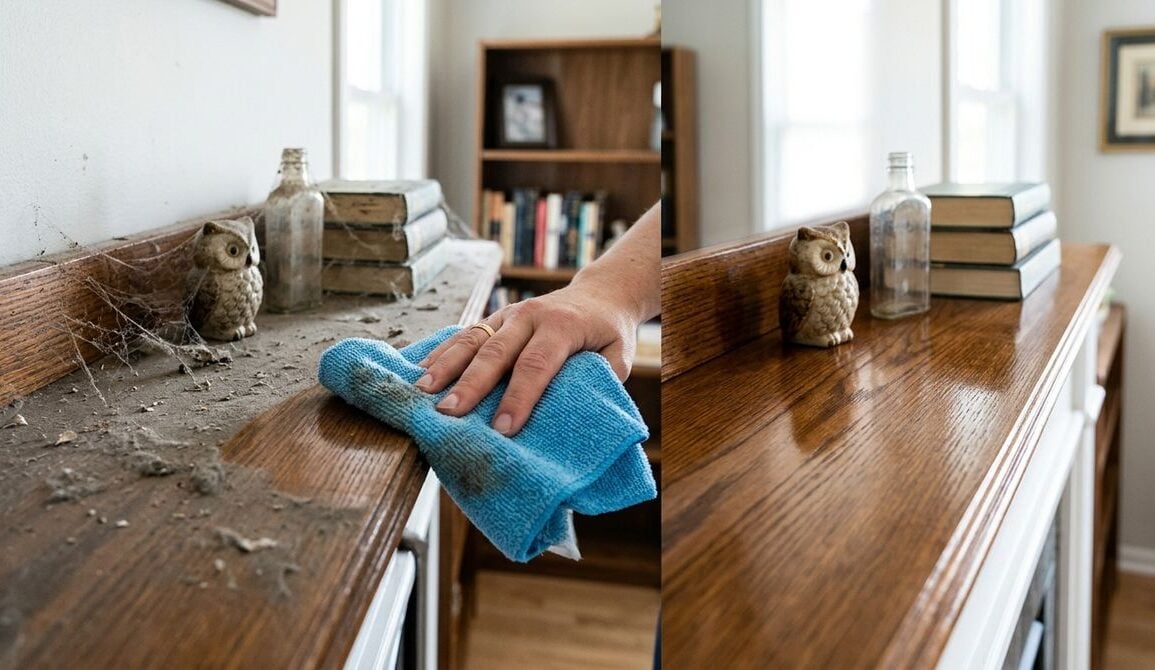
Extended dry weather changes how dust, grit, and plant debris move around a home. Fine particles enter at doors and windows, outdoor drains can hide beneath dry leaves, and seals may show wear before the next rain exposes it. A seasonal routine can reduce indoor dust and prepare the exterior without wasting water or using aggressive cleaning methods.
Follow local water restrictions and product instructions. Avoid working at height or using pressurized water around damaged surfaces, vents, electrical equipment, or openings. Significant cracks, unstable materials, or breathing concerns call for an appropriate qualified professional.
Control dust at the boundary
Start where people, pets, and air bring particles inside. Shake or vacuum entrance mats using a method suited to the material, clean door thresholds, and check whether seals are intact. Store dusty outdoor footwear and equipment in a defined landing area rather than carrying them through living spaces.
On windy days, close windows on the exposed side when practical and use openings on the more sheltered side if conditions allow. Readers may also want to visit Angelos Epoxy Flooring.
Use a top-to-bottom indoor sequence:
- remove loose dust from accessible high surfaces with a suitable tool;
- wipe durable surfaces according to their care instructions;
- clean filters only as the equipment manufacturer directs;
- vacuum upholstery, edges, and floors with appropriate attachments;
- damp-clean compatible hard floors so fine grit is not redistributed;
- wash reusable cloths and let them dry fully before storage.
Inspect rather than over-clean
Dry conditions can tempt people to hose every outdoor surface. First remove loose debris with a brush or vacuum method appropriate to the area. Excess water may simply move dust into drains, stain porous materials, or conflict with restrictions.
Inspect accessible sealant, painted surfaces, timber, and rubber seals for separation, brittleness, or gaps. Do not pick at sound material or apply a new product over a dirty surface. You can also visit idreamhomez.com for more reading.
Check outdoor taps, hoses, and watering connections for drips during use. Keep hoses out of walkways and release pressure and store them as recommended. Water plants according to their actual needs and local guidance rather than using a fixed routine that ignores soil and weather.
Prepare for the first rain
Dry leaves and litter can cover ground drains and channel grates just before a sudden downpour. From a safe ground-level position, clear accessible loose debris and confirm that water routes are not blocked by stored items or planters. Do not enter drainage systems or climb onto roofs.
Walk around the property and look for soil pulled away from edges, loose outdoor objects, and areas where wind has piled debris. For a related read on this site, see A Rotation Plan for Household Items Shared Between.
Secure or store lightweight outdoor objects before weather changes. Make sure bins, screens, fabrics, and tools cannot become windblown hazards. Check that doors and windows close normally; stiffness or visible distortion deserves investigation rather than force.

Keep the routine proportionate
Set a frequency based on exposure. A sheltered apartment may need entrance and window-track attention, while a detached home near bare ground may need more exterior checks. Focus on observed buildup rather than repeating every task automatically.
Protect yourself during dusty work with clothing and equipment appropriate to the task, and stop if conditions cause discomfort. People with respiratory conditions should follow advice from a qualified healthcare professional and local public-health guidance.
Plan cleaning so dust does not immediately return. Work on a calmer day, close doors to unaffected rooms, and clean reusable tools afterward. Empty a vacuum or collection container according to its instructions without creating a new cloud indoors. If outdoor work is producing dust, coordinate tasks so open windows and freshly cleaned textiles are not exposed at the same time.
Record notable wear and photograph it with a date, then check again after the weather changes. A dry-season routine is most useful when it connects today’s dust control with tomorrow’s rain readiness. By cleaning gently, conserving water, and observing accessible parts of the home, you can address small issues without creating new ones.
Remember less obvious entry paths. Pet doors, window tracks, extractor grilles, and frequently used sliders may collect grit even when the main entrance looks clean. Inspect them without dismantling fixed parts, and follow their care instructions. If dust continues despite reasonable cleaning, investigate outdoor source control, damaged seals, ventilation performance, and indoor air-quality concerns with an appropriate professional instead of simply cleaning more often.